Why these topics connect
Nozick introduced the experience machine as a challenge to experiential accounts of well-being.
QUESTION
Would you plug into a machine that supplies perfect experiences but disconnects you from reality?
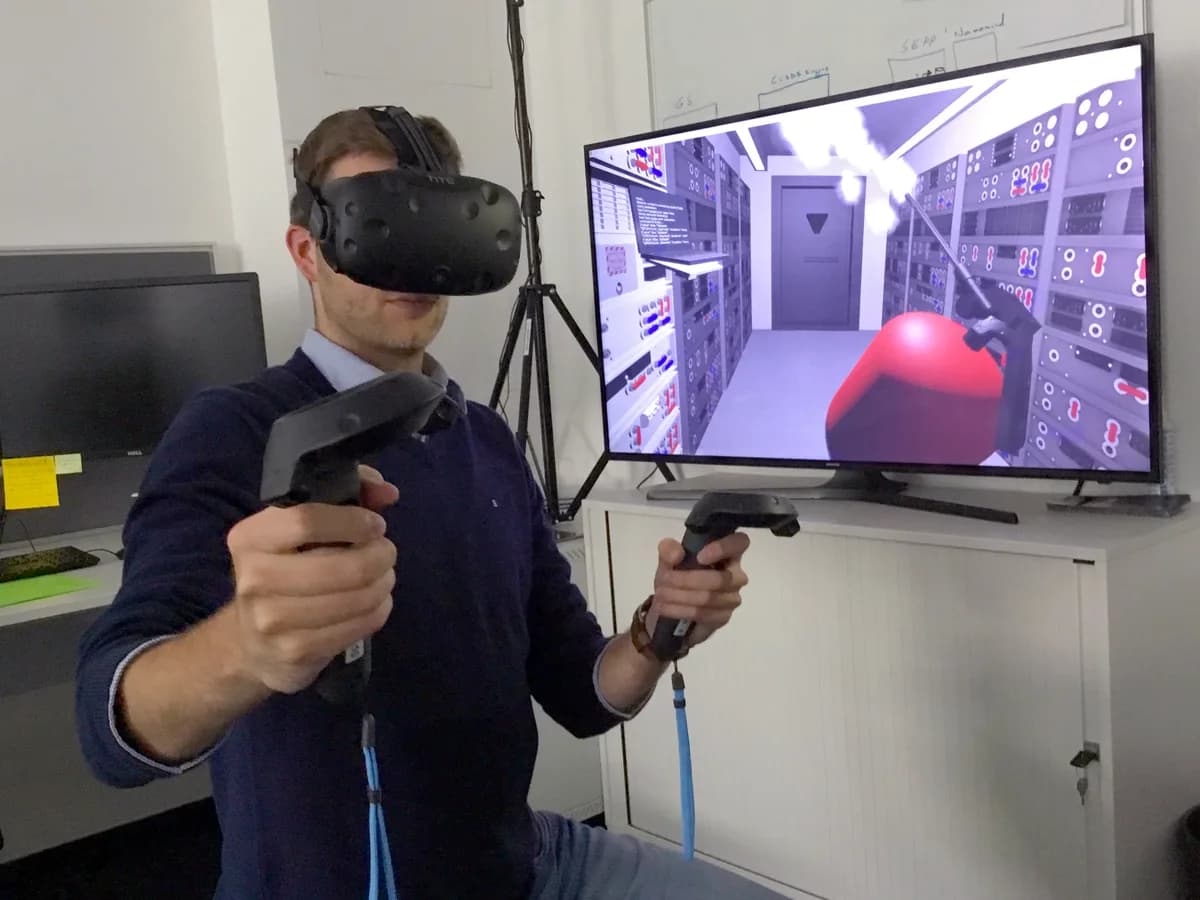
Nozick’s experience machine promises experiences indistinguishable from a fulfilling life. The choice removes familiar objections about unreliable technology and asks whether feeling successful, loved, or creative is enough. It distinguishes pleasure from actually acting in the world, having relationships, and becoming a particular kind of person.
The machine separates how life feels from what a person actually does. Imagine enjoying the experience of writing a novel while no novel exists, or feeling loved while no other person participates in the relationship. The experience could be wonderful yet miss achievement and reciprocity. These possibilities help identify values that cannot be read directly from a person’s mood. The question is whether those values benefit the person, possess independent importance, or do both.
Imagine simulated friendship that feels completely real, then compare it with a demanding relationship involving an actual person. If you prefer the second, identify the extra value: reciprocal care, truth, responsibility, or shared history. Avoid relying on the possibility that the machine might malfunction.
Refusing the machine challenges simple experiential accounts of welfare, but the refusal needs interpretation. Attachment to a familiar life could shape the choice, and some people may value different things. A stronger argument explains why authentic activity contributes to a person’s good rather than merely recording that simulation feels unsettling.
A helpful comparison considers entering the machine from different starting points. Someone with a difficult life might choose differently from someone whose relationships are already fulfilling. That difference could concern welfare, attachment, or the cost of leaving others behind. Explain which reasons survive when transition costs are removed. The machine is most useful when it clarifies what you value in reality, rather than when refusal is treated as a complete theory of the good life.
Would your choice change if no one could ever discover the simulation?
Nozick introduced the experience machine as a challenge to experiential accounts of well-being.
The experience machine challenges hedonistic theories of well-being.
The case asks whether perfect experiences are sufficient for a life to go well.
These points against hedonism are often supplemented with the story of the experience machine found in Nozick 1974 (42–45; cf.
Automatically found mention; a mention does not imply agreement.
Open reference article Retrieved 2026-10-01 · Automatically found mentionThese points against hedonism are often supplemented with the story of the experience machine found in Nozick 1974 (42–45; cf.
To make matters worse, Nozick’s venerable “Experience Machine” objection to hedonism—to the effect that for hedonism a virtual, or Matrix like programmed world is as good as the real one—has received new life with the growth of concerns over developments with AI and the metaverse, which seem to exert a disturbing pressure on people, especially young people, to assume that their good or well-being just is what goes on in their heads, however undesirable that may be (Mulgan 2020: 26–28).
Automatically found mention; a mention does not imply agreement.
Open reference article Retrieved 2026-10-02 · Automatically found mentionTo make matters worse, Nozick’s venerable “Experience Machine” objection to hedonism—to the effect that for hedonism a virtual, or Matrix like programmed world is as good as the real one—has received new life with the growth of concerns over developments with AI and the metaverse, which seem to exert a disturbing pressure on people, especially young people, to assume that their good or well-being just is what goes on in their heads, however undesirable that may be (Mulgan 2020: 26–28).
But there is a yet more weighty objection both to hedonism and to the view that well-being consists only in conscious states: the so-called ‘experience machine’.
Automatically found mention; a mention does not imply agreement.
Open reference article Retrieved 2026-10-01 · Automatically found mentionBut there is a yet more weighty objection both to hedonism and to the view that well-being consists only in conscious states: the so-called ‘experience machine’.
These explanations synthesize philosophical discussions. Examples illustrate the ideas; connections to practical situations are editorial interpretations.

