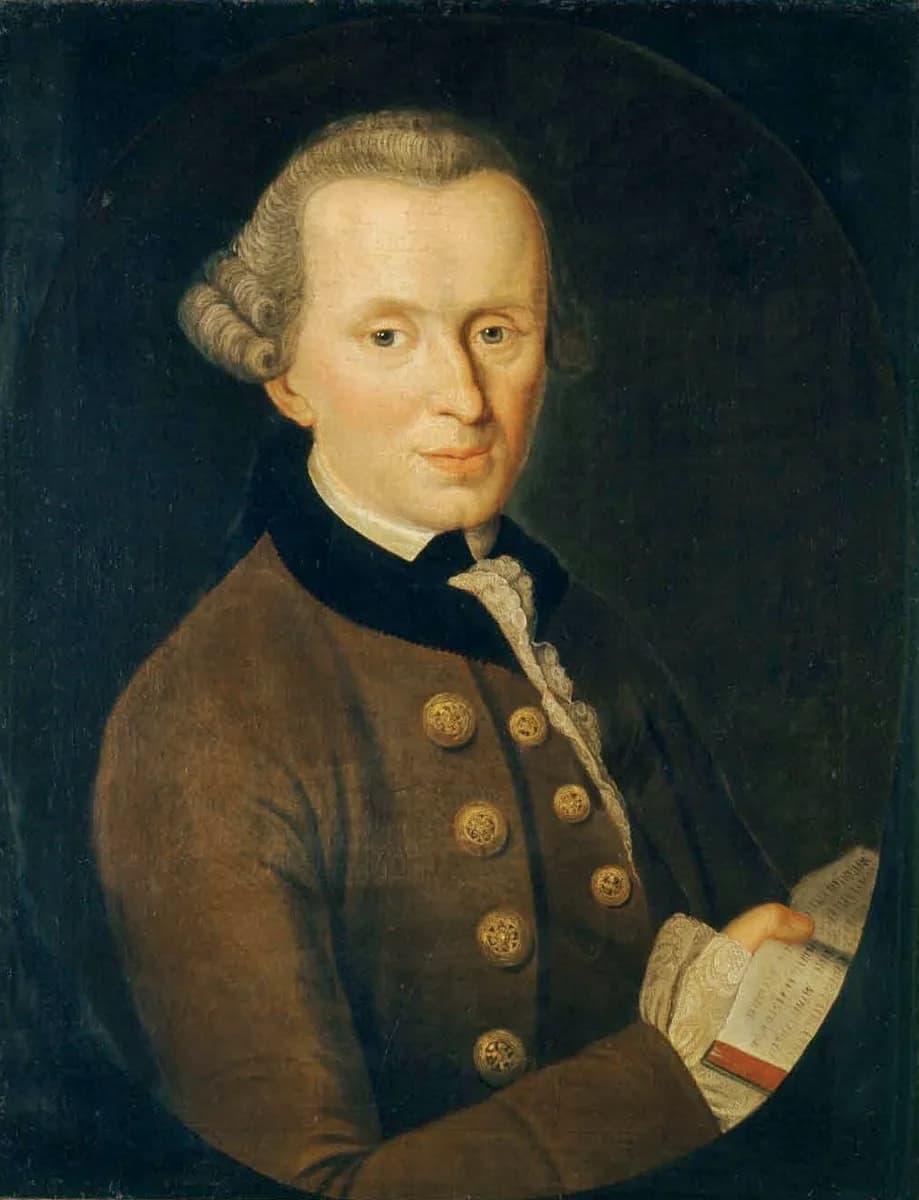
Why these topics connect
The universal-law formulation asks whether a maxim could be a law for everyone.
IDEA
Kant grounds moral requirements in rational agency and tests maxims by whether they can be willed as universal laws.

Kantian moral philosophy connects duty with rational agency and the categorical imperative. Its formulations include testing maxims as universal laws and treating humanity as an end in itself. Autonomy here concerns rational self-legislation rather than simply satisfying whatever preference happens to be strongest.
Kantian moral reasoning links obligation with rational agency and the authority of principles that do not merely express a passing inclination. The universal-law and humanity formulations illuminate different aspects of this project: one tests a maxim’s general authorization, while another concerns respect for persons as ends. They are not interchangeable slogans. Applying them responsibly requires a description of the actual reason for action and of how the people affected participate in the proposed relationship.
Imagine obtaining another person’s agreement by hiding a fact crucial to their decision. Even if the result benefits them, the deception prevents them from deciding on the actual proposal. A Kantian analysis asks how the maxim and treatment of the person could be justified.
Interpreters disagree about demanding duties, moral worth, and applications to hard cases. Respecting persons does not prohibit all cooperation in which they serve someone’s goals; it prohibits treating them merely as instruments. Applying the theory requires explaining both the action’s principle and the respect owed to each participant.
Consider a fictional contract obtained by hiding information essential to the other party’s decision. A universalization analysis examines the deceptive maxim; a respect-based analysis examines how concealment bypasses the party’s agency. The analyses can support related objections through different reasoning. Next compare an honest negotiation with unequal resources. Avoid assuming that transparency solves every question about fairness: it clarifies one issue while leaving further questions about coercion, dependence, and acceptable terms to be explained.
Can you respect someone as an end while asking them to bear a cost for others?
The universal-law formulation asks whether a maxim could be a law for everyone.
Kant’s moral philosophy develops the categorical imperative and duties of respect.
Kant’s moral philosophy is also based on the idea of autonomy.
Automatically found mention; a mention does not imply agreement.
Open reference article Retrieved 2026-10-01 · Automatically found mentionKant’s moral philosophy is also based on the idea of autonomy.
These explanations synthesize philosophical discussions. Examples illustrate the ideas; connections to practical situations are editorial interpretations.