
Why these topics connect
Kant is a central figure in the deontological tradition.
THINKER
A central influence on duty-based ethics and respect for persons.
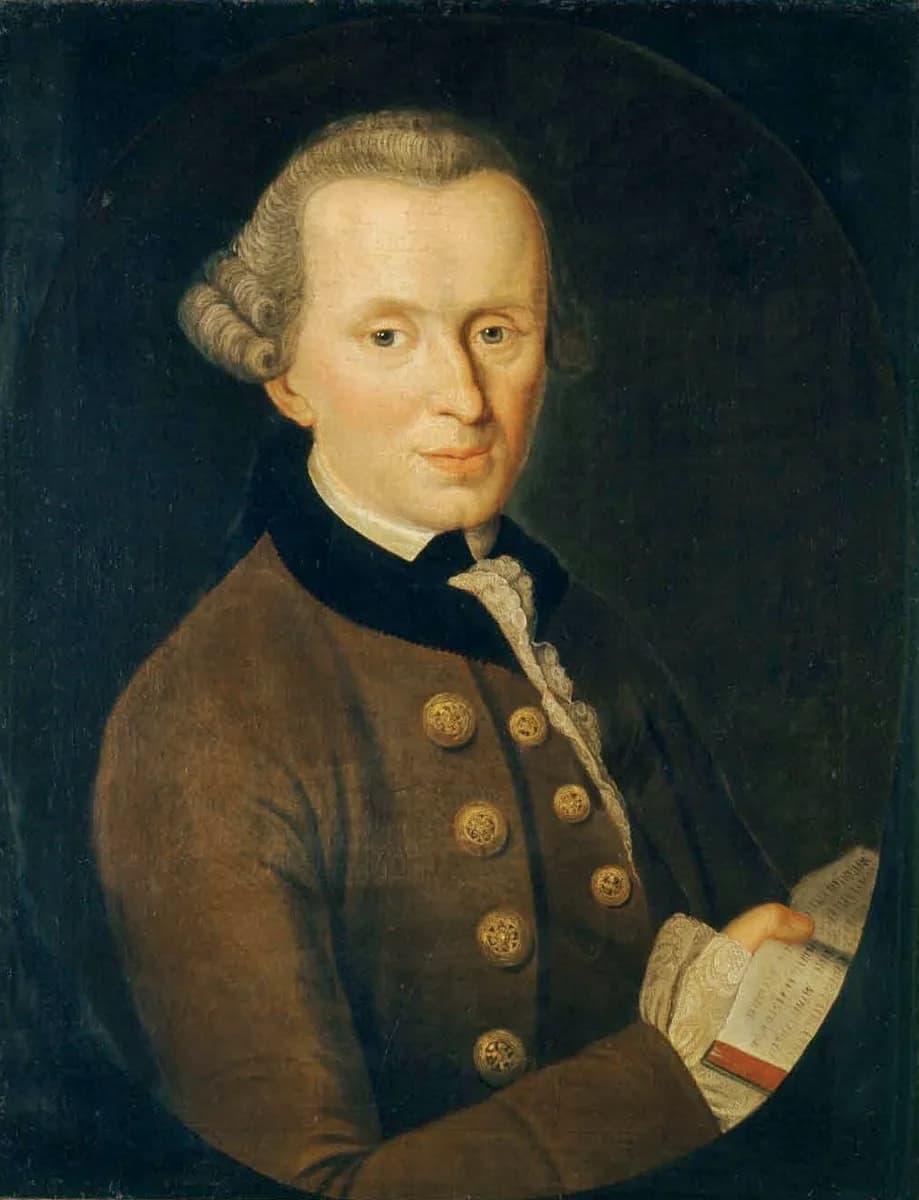
Kant’s moral philosophy asks whether an agent’s principle can be justified as a universal law and whether it respects persons as ends. Moral worth also concerns acting from duty, rather than merely producing a fortunate result. The atlas uses these themes to examine deception, promises, and the limits of beneficial sacrifice.
Kantian ethics concerns the authority of moral principles for rational agents, including their relation to inclination and self-interest. A good outcome does not alone establish that a maxim is acceptable. The agent must also consider whether the principle can be universally authorized and whether people are treated with respect as ends. This framework helps explain why deception can be objectionable before we calculate its effects: it interferes with another person’s ability to choose on informed terms.
Imagine someone telling the truth only because lying would damage their reputation. Compare telling the truth because another person is owed honest dealings. The outward act can be identical while the reason behind it has a different moral significance.
Kant’s framework requires interpreting maxims, rational agency, and conflicts among obligations. Its rigor does not eliminate disputes about application. The challenge is to explain respect and duty in a concrete case rather than simply label an act forbidden, or equate autonomy with doing whatever one currently wants.
Imagine an apparently helpful lie that secures cooperation from someone who would otherwise decline. Explain the maxim and the role of concealed information. A Kantian objection might concern both universal authorization and the bypassing of agency, but neither should be asserted without reasoning. Then compare a truthful proposal made under unequal circumstances. Respect for persons remains a demanding question about conditions of choice, not merely a requirement to use courteous language.
Can a good outcome excuse a maxim that depends on deception?
Kant is a central figure in the deontological tradition.
The universal-law formulation is part of Kant’s categorical imperative.
Kant uses a deceptive promise to illustrate the universal-law test.
Kant’s moral philosophy develops the categorical imperative and duties of respect.
2.4 Deontological Theories and Kant If any philosopher is regarded as central to deontological moral theories, it is surely Immanuel Kant.
Automatically found mention; a mention does not imply agreement.
Open reference article Retrieved 2026-10-01 · Automatically found mention2.4 Deontological Theories and Kant If any philosopher is regarded as central to deontological moral theories, it is surely Immanuel Kant.
These explanations synthesize philosophical discussions. Examples illustrate the ideas; connections to practical situations are editorial interpretations.

