
Why these topics connect
Bentham helped establish classical utilitarianism.
THINKER
A formative figure in classical utilitarianism.
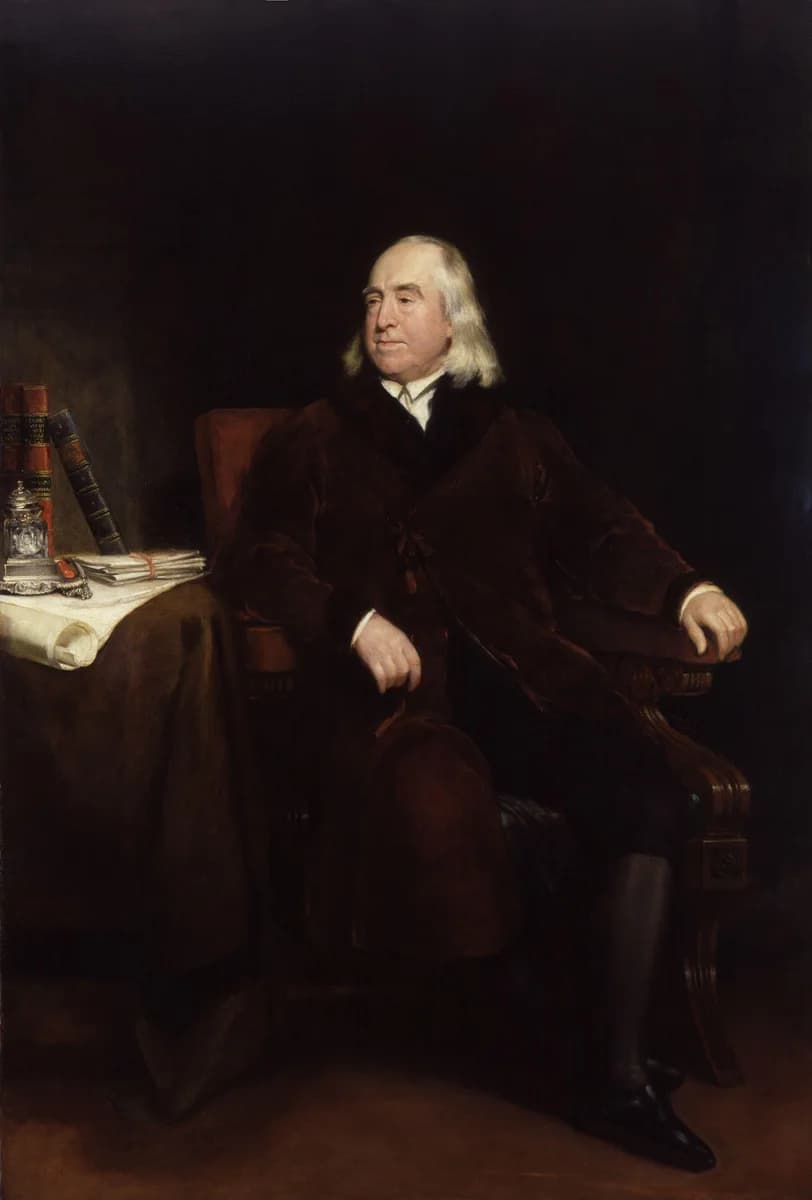
Bentham helped establish classical utilitarianism as a systematic approach to moral and institutional reform. His account takes pleasure and pain as central to evaluation and considers the interests of those affected. In this atlas, he represents the attempt to make the consequences of action explicit rather than defer to inherited authority.
Bentham’s approach asks that moral and institutional proposals be assessed through the interests they affect. Invoking tradition or status is not enough to establish that a practice benefits people. The appeal of this outlook is its demand for public reasons about suffering and improvement. Its difficulty is explaining how different benefits and burdens can be compared without reducing the claims of a vulnerable individual to a convenient contribution to a larger total.
Imagine revising a rule that imposes harsh burdens without a corresponding public benefit. A Bentham-inspired inquiry would ask what suffering the rule causes, what benefit it achieves, and whether an alternative produces a better balance for everyone affected.
The project invites difficult questions about measurement and aggregation. Different people’s experiences may resist comparison, and larger totals can conflict with protections for individuals. Bentham’s place in the web is therefore a starting point for examining welfare-based justification, rather than an assertion that every modern cost–benefit policy follows his philosophy.
Imagine evaluating a rule that imposes inconvenience on many people to prevent serious harm to a few. A Bentham-inspired inquiry asks about the strength and likelihood of each effect, rather than letting the larger head count settle the matter. State the assumptions behind the comparison and consider indirect consequences for trust. This makes the inquiry more demanding than a slogan about happiness: it requires both an account of welfare and evidence about what a rule does.
Can different people’s pleasures be measured on one scale?
Bentham helped establish classical utilitarianism.
These explanations synthesize philosophical discussions. Examples illustrate the ideas; connections to practical situations are editorial interpretations.