
Why these topics connect
Mill offered a major later account of utilitarianism.
THINKER
Developed utilitarian thought with an account of liberty and kinds of pleasure.
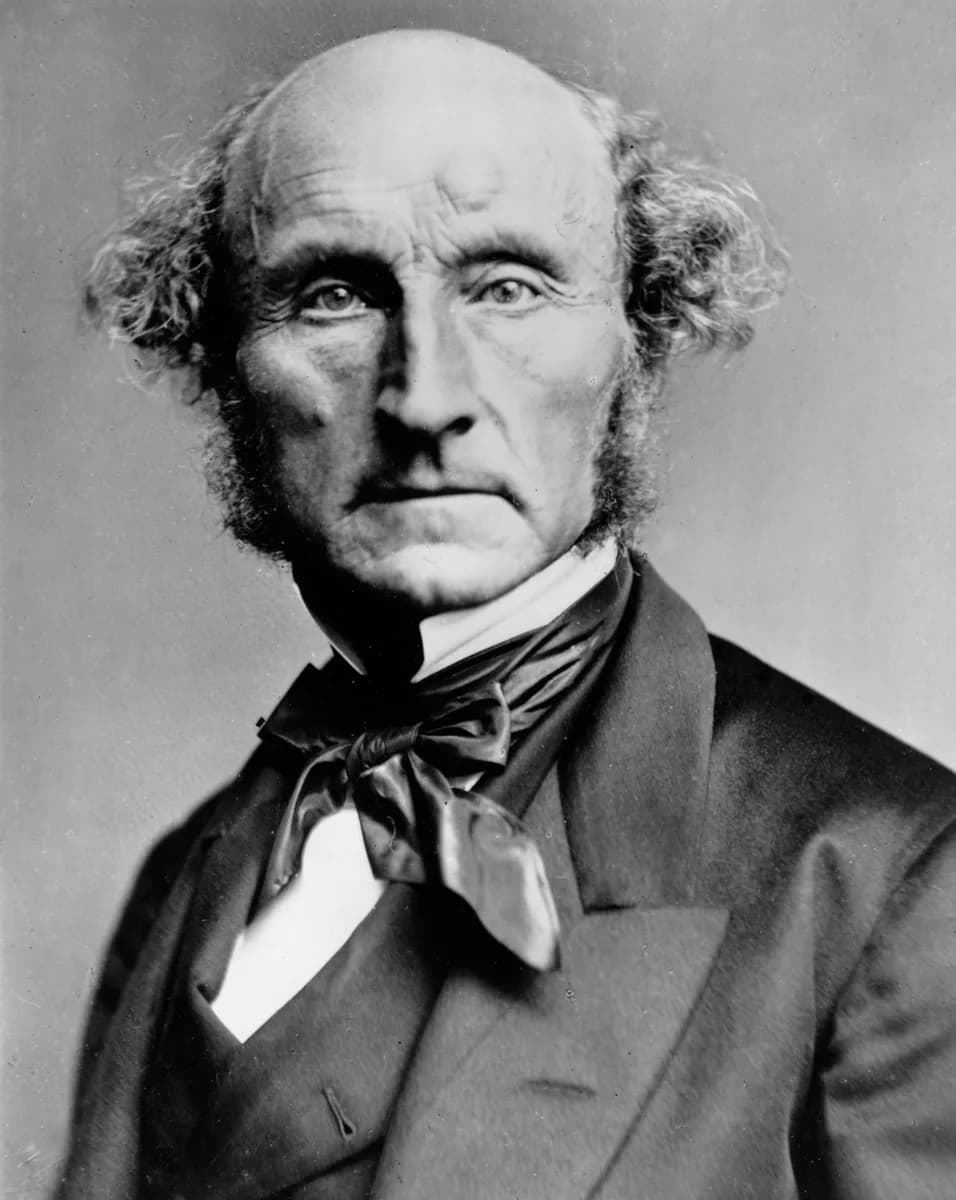
Mill developed utilitarianism while arguing that pleasures can differ in quality as well as quantity. His appeal to the judgments of people acquainted with both kinds of experience complicates a simple pleasure tally. The atlas connects him to the question of what a fuller account of human well-being should recognize.
Mill connects questions about welfare with liberty and the conditions of human development. The value of a life cannot be captured simply by counting pleasant moments without examining their character. Freedom also allows people to form judgments, pursue projects, and learn from different ways of living. These themes raise a problem for utilitarian interpretation: how can a commitment to overall welfare explain strong protection for individual freedom when interference appears locally beneficial?
Imagine choosing between effortless entertainment and demanding learning. Both can be enjoyable, but their value need not be captured by immediate intensity alone. A Mill-inspired comparison asks what people familiar with both kinds of activity would prefer and why.
The distinction between higher and lower pleasures raises concerns about elitism, expertise, and consistency with hedonism. A preference for one activity might reflect status or opportunity rather than its quality. Reading Mill involves examining the reasons for the distinction, not assuming that a familiar cultural hierarchy automatically determines whose enjoyment matters.
Consider an imaginary community deciding whether to forbid an unpopular but harmless form of artistic expression. Immediate discomfort among onlookers is one consequence, while the effects on experimentation and independence are others. A Mill-inspired discussion asks how those interests should be understood and whether public dislike supplies an adequate reason for coercion. It must also explain how liberty changes when conduct creates serious harm to others, rather than assuming freedom resolves every conflict.
Who is qualified to judge that one kind of pleasure is higher?
Mill offered a major later account of utilitarianism.
These explanations synthesize philosophical discussions. Examples illustrate the ideas; connections to practical situations are editorial interpretations.