Why these topics connect
Public protest can test the line between justified disruption and unfair burdens on bystanders.
IN THE WORLD
Citizens confront the tension between respecting law and challenging unjust institutions.
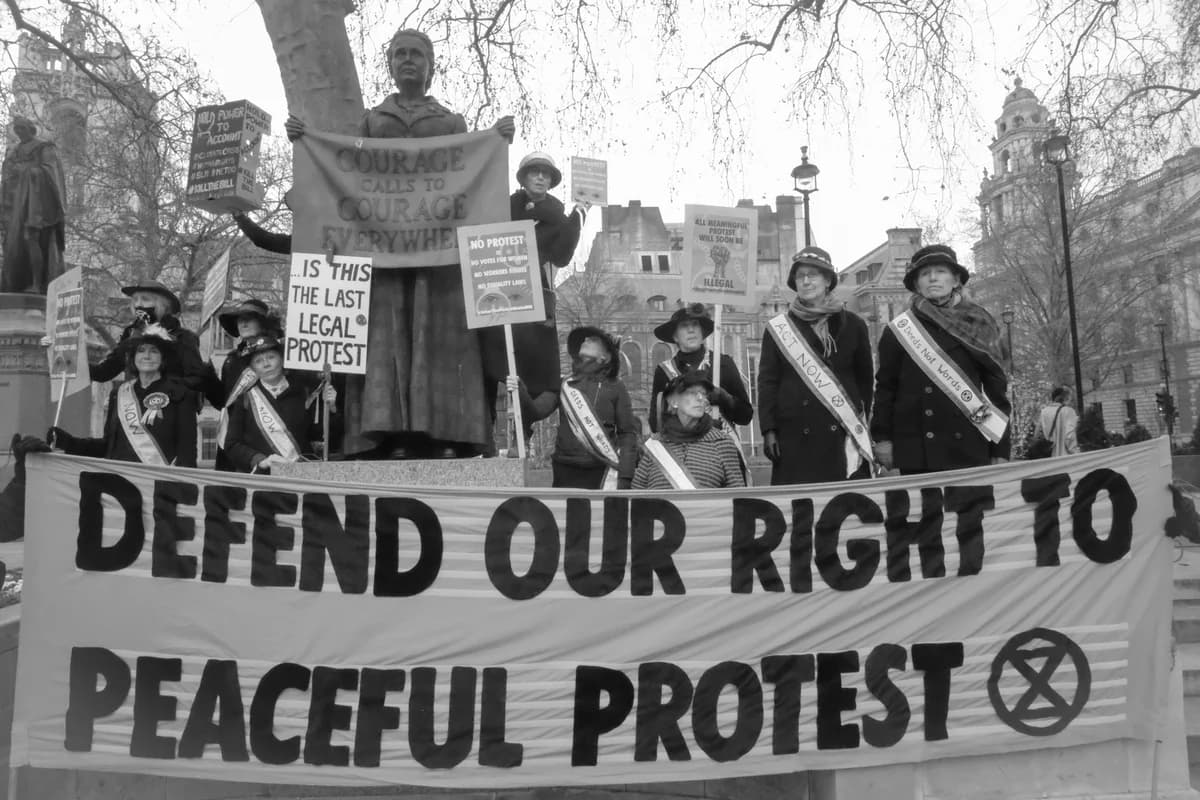
Protest can communicate a grievance, build collective power, and challenge institutional exclusion. Its moral evaluation concerns the injustice opposed and the methods used. Democratic participation includes dissent, yet protesters also face questions about proportionality, public accountability, and burdens imposed on people outside the dispute.
Protest can make an ignored grievance visible and enable people with little institutional power to act together. Its ethical evaluation includes the seriousness of the wrong, the availability of ordinary channels, and the distribution of disruption. A demand for completely costless dissent may deny effective resistance, but an important cause does not remove duties toward bystanders. The assessment needs reasons about the particular tactic and context rather than a blanket endorsement or condemnation of disruption.
Imagine a demonstration interrupting ordinary travel. Compare a brief disruption with one that prevents access to an essential service. The common political purpose does not erase differences in method, foreseeable burden, and available precautions.
Rules requiring polite or nondisruptive action can disadvantage people whom ordinary institutions ignore. Conversely, conscientious purpose does not justify every disruption. A defensible assessment asks which channels were realistically available, how the tactic addresses the injustice, and whether affected people retain a voice in evaluating its costs.
Imagine a fictional demonstration that slows access to an office responsible for an exclusionary rule. Compare warnings and an essential-access route with a tactic that unpredictably blocks unrelated services. The political purpose is shared, but the avoidable burdens differ. Ask how the action communicates the grievance and whether those burdened can be heard. These questions make proportionality practical while recognizing that the people protesting may themselves lack safe or effective opportunities for participation.
Which disruptions can a democratic public reasonably be asked to bear?
Public protest can test the line between justified disruption and unfair burdens on bystanders.
These explanations synthesize philosophical discussions. Examples illustrate the ideas; connections to practical situations are editorial interpretations.