Why these topics connect
Examine the purpose, publicity, and methods of principled protest.
QUESTION
When is breaking a law a responsible way to challenge injustice?
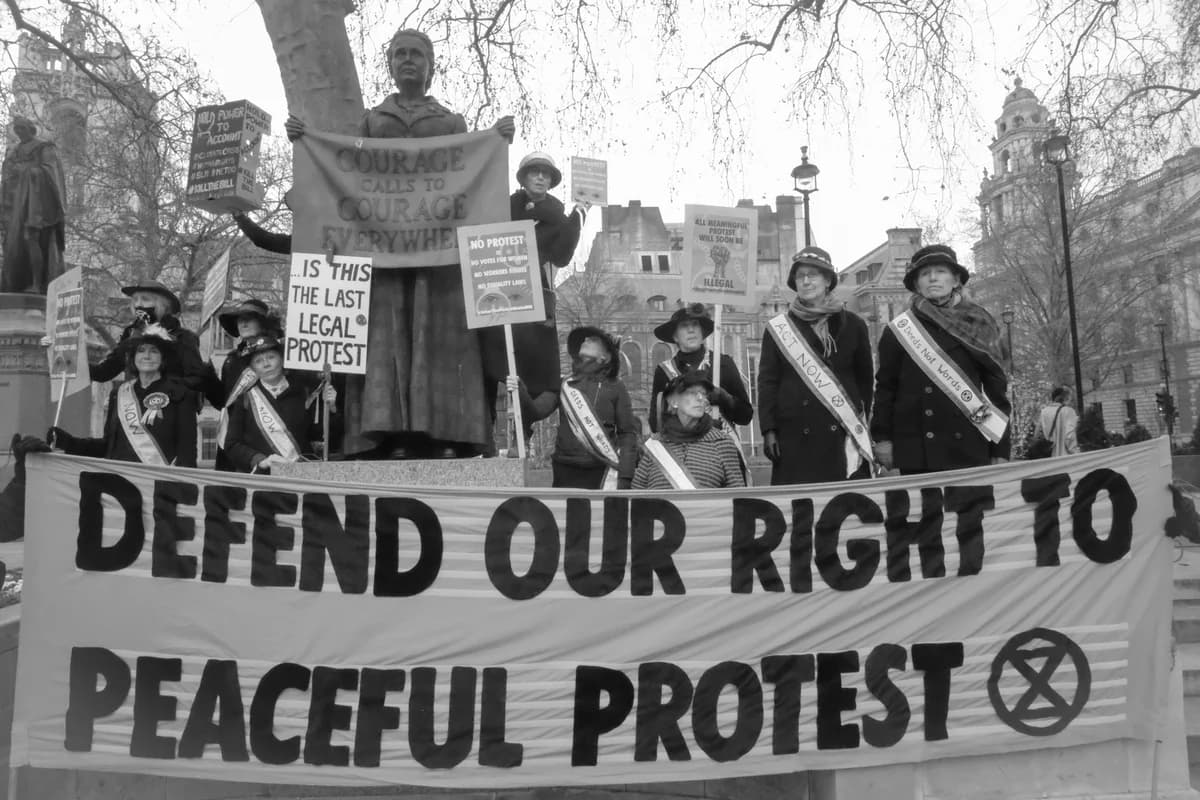
An unjust law creates a conflict between obeying public institutions and refusing participation in wrongdoing. Civil disobedience is often distinguished by conscientious political purpose and communication with a broader public. Its justification depends on the injustice challenged, available alternatives, and the burdens imposed by the method.
Obedience can support predictable cooperation, yet a law’s existence does not establish its justice. A protester may argue that ordinary channels are inaccessible or repeatedly fail to address a serious wrong. The method must then be assessed alongside the grievance. A public breach can communicate refusal and invite collective judgment, but it can also burden bystanders. The central problem is how resistance can challenge institutions while still taking the claims of other people seriously.
Imagine a peaceful sit-in blocking access to an administrative office. Contrast it with a secret refusal to follow the same rule. Identify whether publicity affects the act’s message, its effectiveness, or its moral justification; then consider the impact on people seeking essential services.
Nonviolence, openness, and willingness to accept punishment are debated features rather than universally agreed requirements. Legal permission and moral justification also differ. A defensible account explains why disruption is proportionate, how affected people are heard, and whether ordinary democratic channels are genuinely available to those protesting.
In the sit-in example, ask whether the disruption targets the responsible institution or mainly falls on people with little influence over the disputed policy. Consider warnings, access for essential needs, and less burdensome tactics that could serve the same purpose. These questions do not assume that harmless dissent will always succeed. They make proportionality concrete and help distinguish an argument for justified disruption from the broader claim that any conscientious tactic is acceptable.
Can a protest be justified even if it fails one of those tests?
Examine the purpose, publicity, and methods of principled protest.
Assess the law against fair terms of social cooperation.
Compare the prospects for reform with the disruption and risks of escalation.
Public protest can test the line between justified disruption and unfair burdens on bystanders.
The scenario asks when refusal to cooperate with an unjust institution is justified.
These explanations synthesize philosophical discussions. Examples illustrate the ideas; connections to practical situations are editorial interpretations.