Why these topics connect
Examine the purpose, publicity, and methods of principled protest.
IDEA
Principled lawbreaking can challenge injustice; its justification, methods, and limits remain disputed.
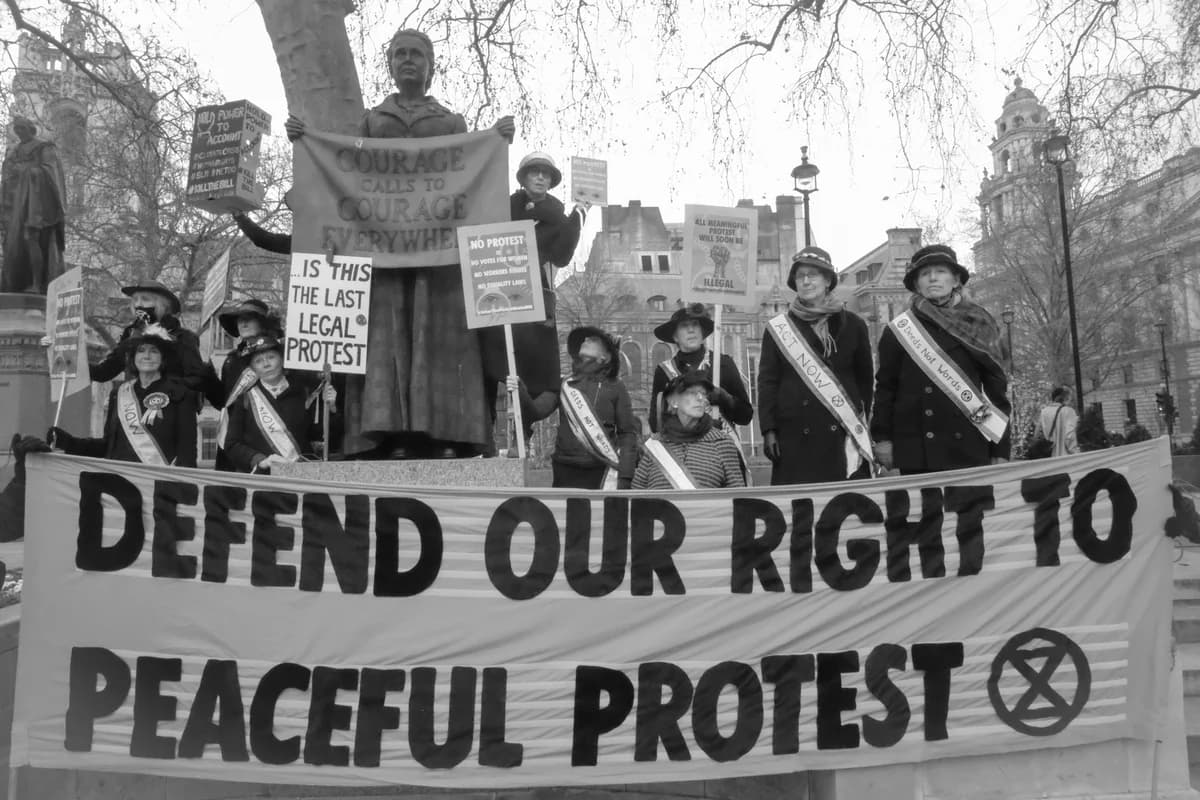
Civil disobedience is a conscientious breach of law aimed at challenging a law, policy, or institutional injustice. Many accounts emphasize communication, public action, and nonviolence, while others revise those conditions. It differs from ordinary lawbreaking primarily through its purpose and relation to political justification.
Political lawbreaking can aim to communicate injustice, interrupt a harmful practice, or create pressure for change. These purposes are related but distinct. Publicity may support a communicative aim, while secrecy could sometimes protect people facing retaliation. Accounts of civil disobedience disagree about which features define the category and which justify an instance. Keeping definition and justification separate prevents a dispute over terminology from deciding whether a particular act of resistance has adequate moral reasons.
Imagine refusing a discriminatory administrative requirement and explaining the refusal publicly. Contrast an identical breach undertaken for personal convenience. The outward act is similar, but its reasons and message differ. Still, good reasons do not automatically justify every tactic.
A central issue is how obedience supports fair cooperation while dissent can expose failures within it. Last-resort requirements, proportionality, and willingness to accept punishment are disputed. The assessment should consider barriers to lawful change and the burdens on bystanders, rather than treating legality or disruption alone as decisive.
Consider a fictional protest against an exclusionary public rule. Ask who bears the disruption, whether the institution can hear the grievance through ordinary channels, and how the method connects to the wrong opposed. Willingness to accept punishment may convey sincerity, but it is a further claim that suffering punishment is always required. A reasoned judgment evaluates the protest’s circumstances and competing duties, instead of making legality, visibility, or disruption a complete test by itself.
What feature makes a breach of law a moral appeal rather than mere defiance?
Examine the purpose, publicity, and methods of principled protest.
Thoreau’s principled tax refusal and writing are discussed in the history of civil disobedience.
Rawls analyzes civil disobedience in relation to justice and fidelity to law.
These explanations synthesize philosophical discussions. Examples illustrate the ideas; connections to practical situations are editorial interpretations.