Why these topics connect
Thoreau’s principled tax refusal and writing are discussed in the history of civil disobedience.
THINKER
His refusal to cooperate with injustice helped shape the discussion of civil disobedience.
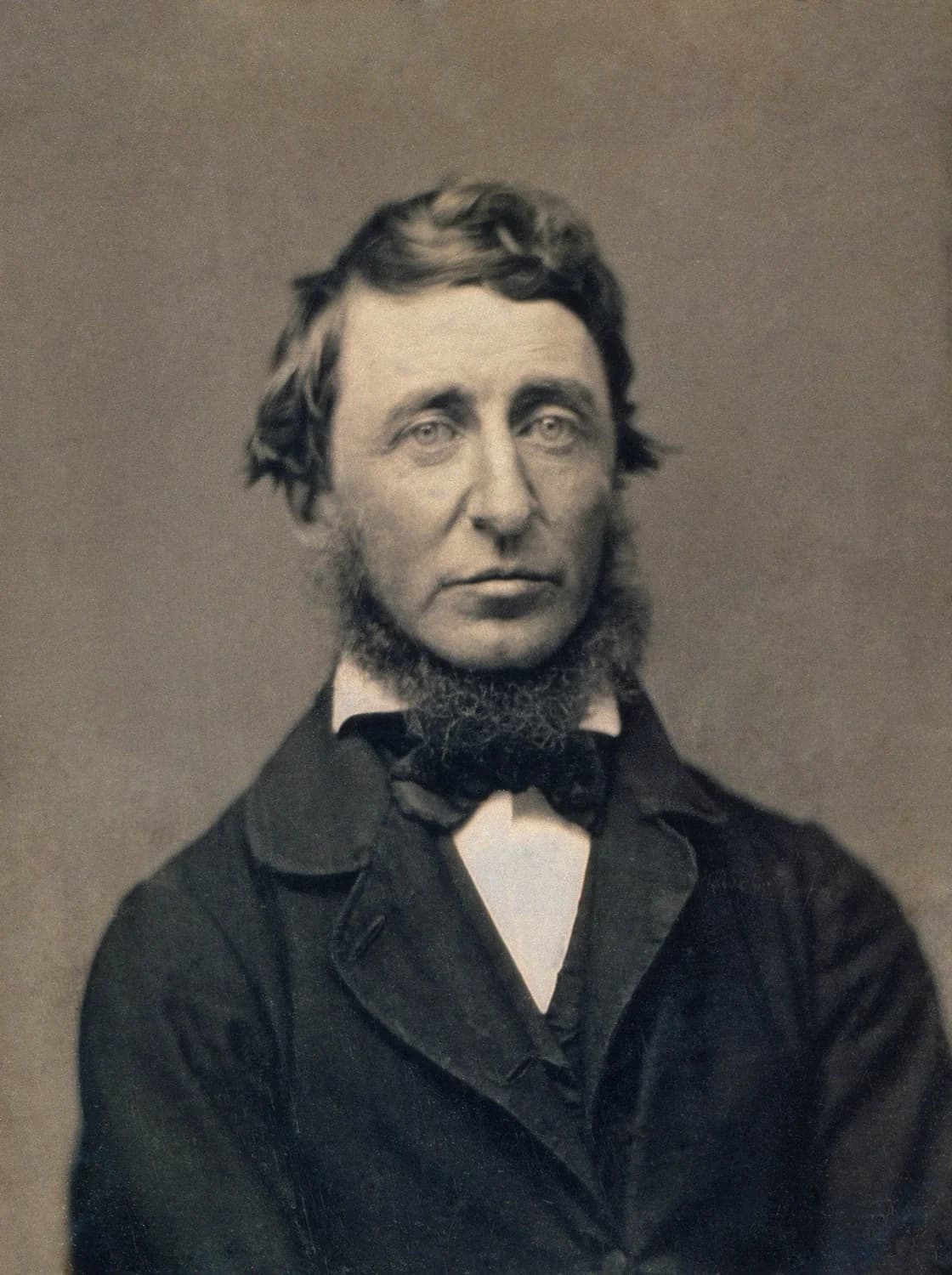
Thoreau’s refusal to cooperate with institutions he regarded as unjust became an important reference point in discussions of civil disobedience. His example raises questions about conscience, complicity, and withdrawing support. Its influence should be distinguished from the later theories that specify conditions for justified public protest.
Thoreau’s connection with civil disobedience places conscience and complicity at the center of political obedience. The issue is not simply whether a rule is inconvenient, but whether compliance makes a person participate in an injustice. This perspective can challenge complacent reliance on established authority. It also creates further questions about judgment and collective life: a person must explain the wrong they oppose and how their refusal respects the claims of others.
Imagine objecting to an institution’s conduct while continuing a form of support you could reasonably withdraw. Refusal may express a moral boundary, though its practical impact and burdens on others still need assessment.
Personal conscience can motivate resistance without proving its claims correct. A political argument must explain the injustice, the relation between support and responsibility, and the chosen method. The debate also asks whether individual refusal can contribute to collective change or leave crucial tasks of organization and public justification unfinished.
Imagine refusing a fictional administrative demand because it contributes to exclusion. State the injustice, the relationship between compliance and that injustice, and what the refusal can accomplish. Then ask whether the burdens fall on the responsible institution or on vulnerable bystanders. A conscience-based reason deserves examination without becoming automatic permission for every tactic. Reading Thoreau alongside broader accounts of democratic protest helps connect individual integrity with public justification and effective change.
When is refusal more effective or more honest than participation?
Thoreau’s principled tax refusal and writing are discussed in the history of civil disobedience.
The scenario asks when refusal to cooperate with an unjust institution is justified.
These explanations synthesize philosophical discussions. Examples illustrate the ideas; connections to practical situations are editorial interpretations.